

/
BLOCKMOD
What do we Do?
Giving online feedback to design students is inefficient. BlockMod helps educators in the design field save time and frustration by turning the space around the user into a studio. Since its conception, the idea underwent several iterations. The initial objective of BlockMod was to help students express themselves easily. However, after several interviews and feedback from potential users, the problem statement evolved to what it is today.
This is our journey of understanding the problem and formulating a solution.
Idea Conception
After observing people with architecture backgrounds ‘like’ and share elaborate concept videos on the internet, I started working on an assumption that people wanted to create similar architectural graphics.


User Persona and User Study
Undergoing through various scenarios we found the kind of users and customers that could be using the service and face the problem we have addressed.
Understanding the scenario the user i.e.
Architectural Students
Portfolio Students
Professional Architects


Feedback and Affinity mapping
After getting minimum signups for our page, we started to interview architecture students and tutors to understand the problem we were trying to address.
We interviewed over a dozen students and worked on affinity diagrams to connect the issues.
We also worked on personas and empathy
maps which helped us understand our users better.

Understanding Connections using Affinity Diagram
Iteration and Product Mock‑up
In the process of working on the interviews, we also created a product video that communicated our vision better. Our landing page was redesigned accordingly, to match the theme and message being conveyed.
1st Iteration of Landing Page

Website page to evaluate 1st Iteration

Layering of the model on which idea the application works on


2nd Iteration of Landing Page

Website page to evaluate 2nd Iteration
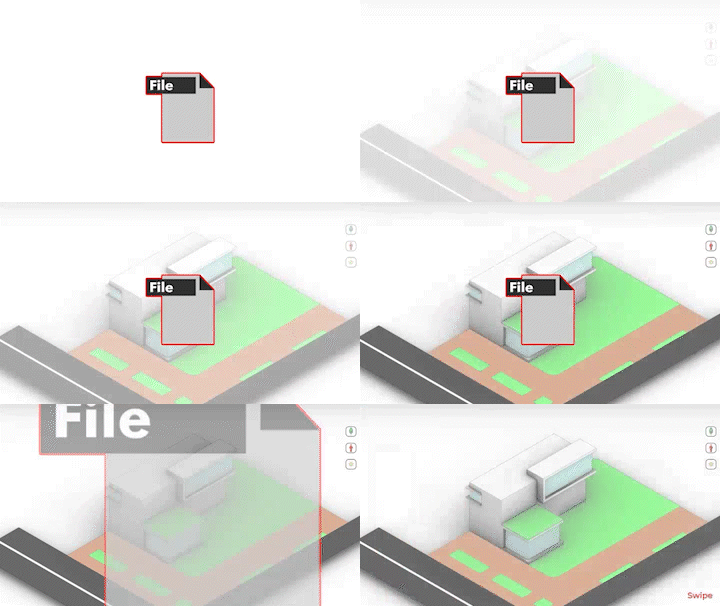
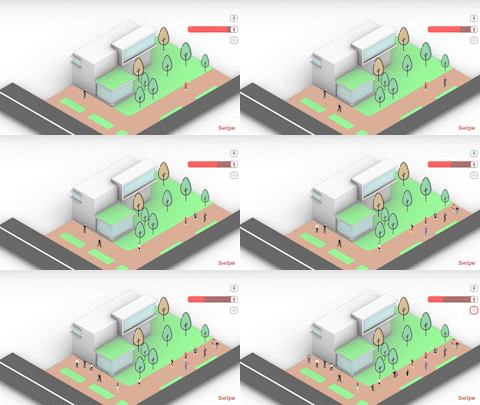
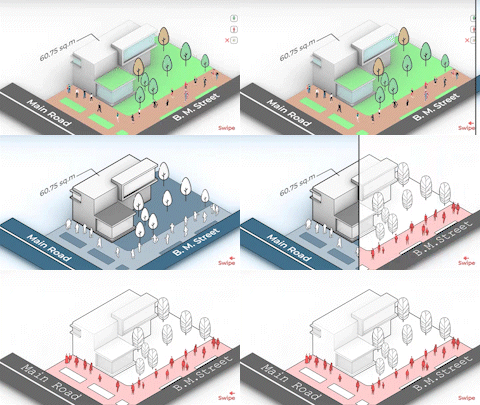
The short demo articulates how it would be possible to create quick, presentable concept images and clips in less than 60 seconds. Our assumption was mostly based on our observations on social media and initial interviews.


Further Development
With the first round of interviews behind us, we worked on refining the problem statement.
We used the 5-Whys technique and decided to go with the problem statement-
“ How might we help students try out different
styles for panels in a short period of time? ”


3rd Iteration of Landing Page
Current Stage
After several conversations with students, we proceeded to chat with lecturers and tutors and asked about their problems. Due to COVID-19, educators have had trouble giving online feedback to the students using the current applications.
Our focus has now shifted to creating a tool that helps educators give feedback to students and save time and frustration.

Website page to evaluate 2nd Iteration